Tampilkan postingan dengan label Dentistry. Tampilkan semua postingan

Senin, 12 September 2011

Oral symptoms of systemic diseases - what to suspect?


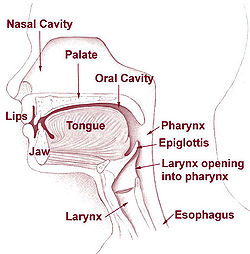
Examination of the oral cavity (mouth) may reveal findings pointing to an underlying systemic condition, and allow for early diagnosis and treatment.

Oral examination should include evaluation for:

- mucosal changes
- periodontal inflammation and bleeding
- condition of the teeth

Examples of lesions:

- Oral findings of anemia may include mucosal pallor, atrophic glossitis, and candidiasis.

- Oral ulceration may be found in patients with lupus erythematosus (SLE), pemphigus vulgaris, or Crohn disease. Oral manifestations of lupus erythematosus may include honeycomb plaques (silvery white, scarred plaques); raised keratotic plaques (verrucous lupus erythematosus); erythema, purpura, petechiae, and cheilitis.

Oral findings in patients with Crohn disease may include diffuse mucosal swelling, cobblestone mucosa, and localized mucogingivitis.

- Diffuse melanin pigmentation may be an early manifestation of Addison disease.

- Periodontal inflammation or bleeding should prompt investigation of conditions such as diabetes mellitus, human immunodeficiency virus (HIV) infection, thrombocytopenia, and leukemia.

- In patients with gastroesophageal reflux disease (GERD), bulimia, or anorexia, exposure of tooth enamel to acidic gastric contents may cause irreversible dental erosion. Severe erosion may require dental restoration. 

- In patients with pemphigus vulgaris, thrombocytopenia, or Crohn disease, oral changes may be the first sign of disease.

References:
Oral manifestations of systemic disease. Chi AC, Neville BW, Krayer JW, Gonsalves WC. Am Fam Physician. 2010 Dec 1;82(11):1381-8.
Image source: Head and neck. Wikipedia, public domain.

Rabu, 16 Maret 2011

Oropharyngeal carcinoma increased by 22% in 6 years, related to rise in HPV

Head and neck cancer is the sixth most common cancer. Despite an overall marginal decline in the incidence of most head and neck cancers in recent years, the incidence of oropharyngeal squamous cell carcinoma has increased greatly, especially in the developed world.

In the United States, the incidence of oropharyngeal squamous cell carcinoma increased by 22% between 1999 and 2006.

The increase in incidence of oropharyngeal squamous cell carcinoma seems to be accounted for by a rise in human papillomavirus (HPV) related oropharyngeal carcinoma.

References:

Oropharyngeal carcinoma related to human papillomavirus. BMJ 2010; 340:c1439 doi: 10.1136/bmj.c1439 (Published 25 March 2010).
Image source: HPV types and associated diseases, Wikipedia, public domain.

Twitter comments:

@travispew (Travis Pew): So get your kids the HPV shot.

Jumat, 18 Februari 2011

People who brush their teeth less than twice a day have a 70% increased risk of heart disease

A Scottish national population based survey examined if self reported toothbrushing behaviour is associated with cardiovascular disease and markers of inflammation (C reactive protein) and coagulation (fibrinogen).

Participants were 12,000 men and women, mean age 50. Oral hygiene was assessed from self reported frequency of toothbrushing. There were a total of 555 cardiovascular disease events over an average of 8 years of follow-up, of which 170 were fatal.

Participants who reported poor oral hygiene (never/rarely brushed their teeth) had an increased risk of a cardiovascular disease event (hazard ratio 1.7).

They also had increased concentrations of both C reactive protein and fibrinogen.

Poor oral hygiene is associated with higher levels of risk of cardiovascular disease and low grade inflammation, though the causal nature of the association is yet to be determined.

References:
Toothbrushing, inflammation, and risk of cardiovascular disease: results from Scottish Health Survey. BMJ 2010;340:c2451.
Image source: Cross-section of a tooth with visible gums, or gingiva, Wikipedia, GNU Free Documentation License.